

How To Set Up A Fish Tank Properly
We explain what's required to create the perfect tank.
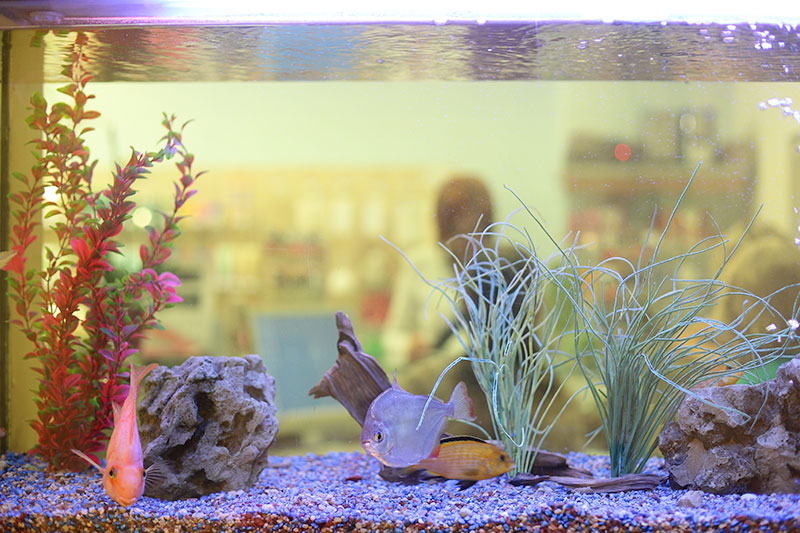
Congratulations – y'all're ready to become a fish parent! In that location are a lot of options for setting up your aquarium, with many unlike sizes and pieces of equipment bachelor. An ideal beginner aquarium is one of the new 'all in one' aquariums made by a number of manufacturers. These come with lights and filters built into the aquarium and they are easy to gear up. If you are going to go along tropical fish then you will need to purchase a heater equally well.
Which aquarium is right for you?
In order to savour your new aquarium for a long time, you should be certain about the appropriate size, furnishing (for example, if it needs its own stand) and position you're going to have it in. The size of the aquarium determines the type and number of fish that tin can alive in information technology and too affects the corporeality of time that you should programme for the ongoing care of the aquarium.
Where to put your aquarium
A tranquility, depression-traffic area out of directly sunlight is all-time. Practise non put your tank in front end of or about a heater or ac unit, equally this leads to temperature fluctuations that will stress the fish. Your tank should be placed near an electricity indicate so that you lot can easily plug in your heater and filters (and your power point should be on an earth leakage circuit breaker). Ensure that your tank is sitting on a suitable tank stand up or base and floor that will support the weight of the tank.
Basic equipment list for a freshwater aquarium
Here is what is needed to gear up a freshwater aquarium. Your local Petbarn tin provide you with the right advice when you are deciding what specifically to buy.
- Aquarium and stand to suit
- Gravel
- Groundwork decoration (if desired)
- A filter system and pump
- Calorie-free
- Heater for tropical fish
- Air stone
- Plants (natural or imitation)
- Decorations such as rocks, driftwood, ornaments, flower pots
- Water conditioner, pH examination kit, ammonia test kit
- Fish and fish food.
Tip: Buy your fish last. You demand to let time for your tank to 'bicycle' before you tin can introduce your showtime fish. The cycling process is where the filter builds upwards a population of beneficial bacteria that will break down the toxins in the h2o that are produced by fish waste.
Setting up
- Clean out your new tank with tap water only. Practice non utilize any sort of chemicals or soaps. Using soaps tin go out residue on the glass and impairment fish once they go into the tank.
- Launder the gravel thoroughly with tap water in a bucket. Rinse information technology until all the grit is rinsed off. Place into the aquarium to a depth of one to two centimetres. If you are using an under gravel filter, then place your gravel to a depth of v centimetres.
- Rinse ornaments (rocks, driftwood, etc.) with tap water and identify carefully into aquarium.
- Install all of your electrical equipment (eastward.g. heater, filter and air pumps). Caution: Practise not plough on your equipment until in that location is h2o in the tank and your hands are out.
- At present you can make full your tank with water. An easy way to practice this and avoid messing up your ornaments is by placing a plate into the bottom of the tank and pouring water over the top. Add water conditioner to remove toxins in the tap water and adjust pH and water hardness to suit the needs of your fish.
- You tin can and so plug all electrical elements into the power points and turn them on. Allow the aquarium time to heat up before adding plants and cycling your tank for fish. This normally takes 12 to 24 hours.
- Before introducing your fish, test your water conditions using your pH and ammonia test kits. Make sure that your ammonia is 0. These fish care sheets and checklists will help yous ensure your fish stay salubrious. Think to keep the pH slightly acid (half-dozen.eight to 7.0) while cycling your tank as it reduces the toxicity of ammonia. Exercise not introduce fish until the water weather are correct.
Decorative touches
Plants, roots and other decorations make your aquarium into a beautiful middle-catcher and at the aforementioned fourth dimension fulfil vital functions in your tank habitat. Aquatic plants produce oxygen and provide your aquarium fish with hiding places. Decorative elements, such every bit tree roots, rocks, or even posters for the aquarium background provide visual diverseness and always bring a new expect to your underwater world. Discover our varied decorative range and enjoy adding these personal touches.
Final training
No matter what type of filter you use, 'good' bacteria volition need to colonise it in guild to remove toxic waste product products such as ammonia from the water. This process is called nitrification or biological filtration. New aquariums and filters volition not have these bacteria and it can take several weeks to institute a fully functioning biological filter. During this time ammonia or nitrite can build up to toxic levels causing stress, disease or expiry. Therefore it is important that y'all do not overstock the tank. Problems tin exist reduced by:
- Gradually building upwardly the population of fish over four to five weeks.
- Using live plants – these tin can absorb some of the toxic products directly from the water.
- Only feeding the fish sparingly (one time every 2d twenty-four hours), to reduce the amount of ammonia produced.
- Testing ammonia and nitrite levels – change water equally needed.
- Being mindful of your pH levels. Lowering pH reduces the toxicity of ammonia.
- Using 'Stress Zyme' 'Cycle' or similar products to heave nitrifying leaner levels.
What do I feed my fish?
Like humans, quality nutrition plays a huge part in keeping your fish live and well. It is of import to likewise select the right variety of food for your fish. A good way to exercise this is to consider the area of the tank in which your fish dwell. For instance, top-dwelling fish such as Hatchetfish and Halfbeaks are all-time suited to flakes, as these will float on the surface. For medium-dwelling house fish, such as Rainbow Fish, Goldfish and Gourami, crisps (which sink slowly) are a good option. Finally for bottom-dwellers like Cories, Loaches and Catfish, a wafer is ideal as it will quickly sink to the bottom for them to devour.
For more information, visit the fish section of Petspot website or check out these handy videos on fish care:

How To Set Up A Fish Tank Properly,
Source: https://www.petbarn.com.au/petspot/fish/care-and-maintenance-fish/set-fish-aquarium/
Posted by: rodriguezwhistooday.blogspot.com
0 Response to "How To Set Up A Fish Tank Properly"
Post a Comment